Every winter, approximately 20,000 Eastern North Pacific gray whales undertake one of nature’s most extraordinary journeys—a 10,000 to 14,000-mile round-trip migration from the icy feeding grounds of Alaska’s Bering and Chukchi Seas to the warm, shallow lagoons of Baja California, Mexico. This epic voyage represents the longest known migration of any mammal on Earth. San Diego’s unique coastal geography positions it directly along this ancient migration corridor, with deep-water submarine canyons located just 1-5 miles offshore, making it one of the premier destinations worldwide to witness these magnificent creatures as they pass by between December and April, with peak sightings occurring from mid-January through February.
Why They Travel: The Biology Behind the Journey
I’ll never forget the first time someone explained to me why these whales swim halfway across the planet. It wasn’t just wanderlust—it was survival, wired into their DNA over millions of years.
See, gray whales are eating machines during the Alaskan summer. From June through October, they’re up in the Bering and Chukchi Seas, rolling onto their sides and literally vacuuming the ocean floor for amphipods, ghost shrimp, and other tiny crustaceans. They pack on tons—and I mean literal tons—of blubber during this feeding frenzy. That layer of fat? It’s their fuel tank for the entire migration.
But when October rolls around and those northern waters start to freeze, the whales know it’s time to move. The ice comes, their food disappears, and boom—they’re off on one of the most predictable migrations in the animal kingdom.
Destination: Baja’s Birthing Lagoons
Here’s where it gets really interesting. These whales aren’t just traveling for warmer weather. The pregnant females—and there are thousands of them—are heading to very specific lagoons in Baja California: Laguna San Ignacio, Laguna Ojo de Liebre, and Bahía Magdalena.
Why those spots? The water’s warm, yes, but more importantly, it’s shallow and protected. Killer whales—orcas—are the gray whale’s main predator, and they hunt in deep water. A newborn gray whale calf, weighing around 2,000 pounds and stretching 15 feet long, doesn’t stand a chance in the open ocean. But in those shallow lagoons? Safe as houses.
The breeding timeline is fascinating. Female gray whales enter their estrus period (basically, when they can conceive) in mid-November through early December, with a second phase lasting into February. After a 12-13 month pregnancy, calves are born right there in those lagoons, typically between January and mid-February. Then, around March, the mothers make the return journey north with their babies swimming right alongside them.
And that’s when San Diego whale watchers get treated to something truly special—mothers teaching their calves how to navigate the open ocean for the very first time.
Meet the Gray Whale: Ocean Nomads with Personality
Gray whales are… well, they’re not the prettiest whales in the sea, if we’re being honest. But what they lack in elegance, they make up for in character.
What They Look Like
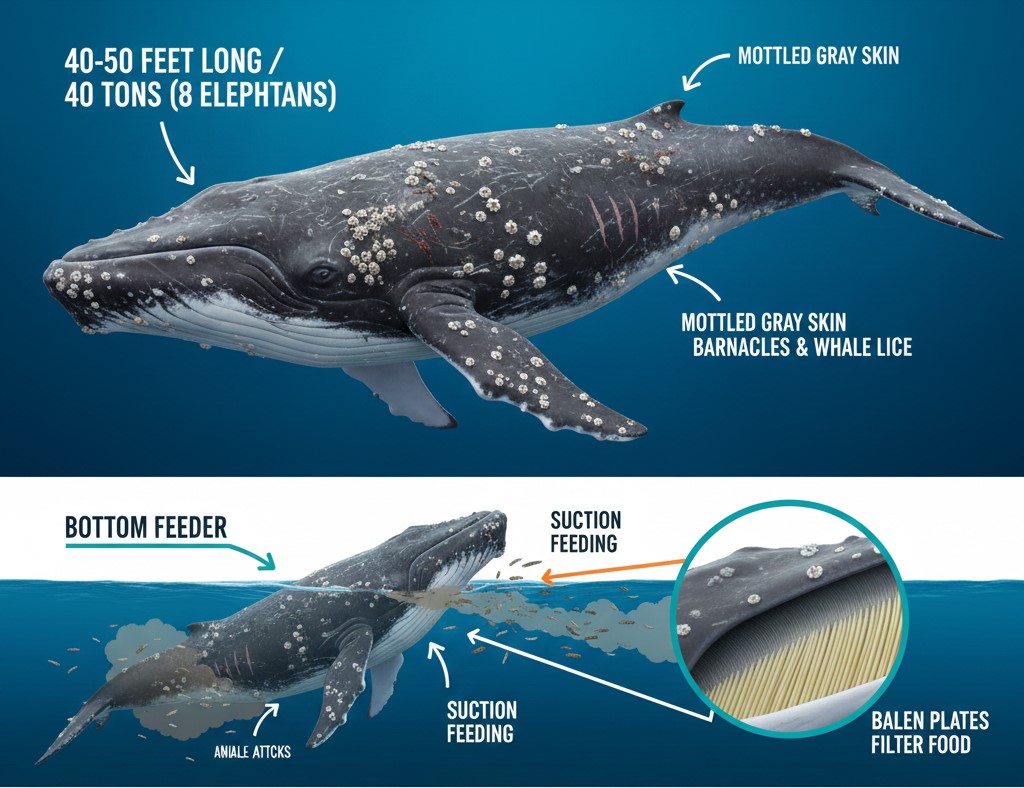
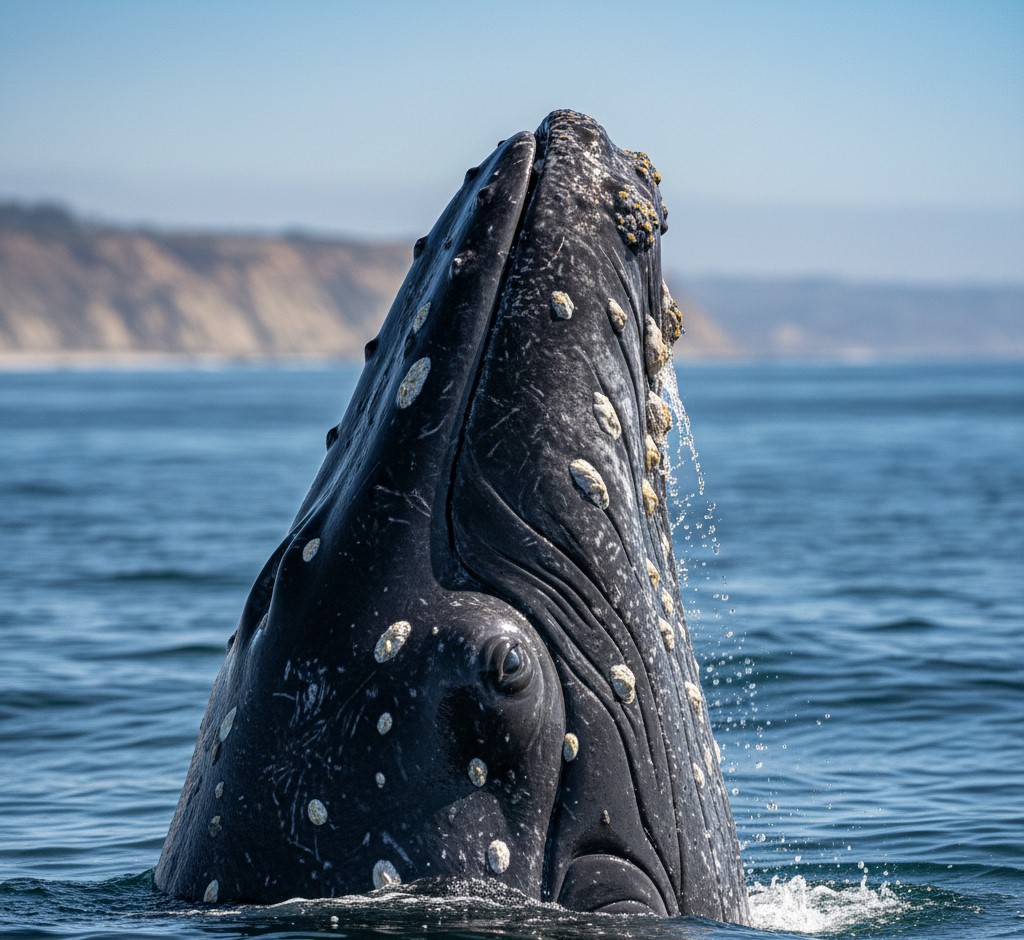
A full-grown gray whale stretches 40-50 feet long and tips the scales at around 40 tons. That’s roughly the weight of eight elephants. Their skin is mottled gray, covered in white patches and scars—battle wounds from orca attacks, barnacles, and whale lice (yeah, that’s a thing). Some whales are so covered in barnacles they look like swimming rocks.
But here’s what makes grays truly unique among the great whales: they’re the only ones that feed primarily on the ocean floor. While blue whales and humpbacks filter tiny krill from the water column, gray whales are bottom feeders—and they’ve evolved some seriously cool adaptations for it.
The Art of Bottom Feeding
Picture this: a 40-foot whale rolls onto its right side (they’re almost always right-sided feeders—lefties are rare), opens its massive mouth, and creates a vacuum that sucks up sediment, mud, and everything in it from the seafloor. Then, using 130-180 short, coarse baleen plates (those cream-colored, brush-like structures in their mouths), they filter out the amphipods and shrimp while expelling the mud back out.
The result? They leave behind oval-shaped “feeding pits” on the ocean floor, about 3 feet by 6 feet. If you could see the bottom of the Bering Sea in summer, it’d look like someone went crazy with a giant ice cream scoop.
During migration, they don’t eat much—they’re running on those blubber reserves. But some whales do make pit stops in places like Monterey Bay or the Gulf of California to grab a snack if the opportunity presents itself.
Behaviors You’ll Actually See
Okay, so you’re on a boat off the San Diego coast in January. What are you actually going to witness?
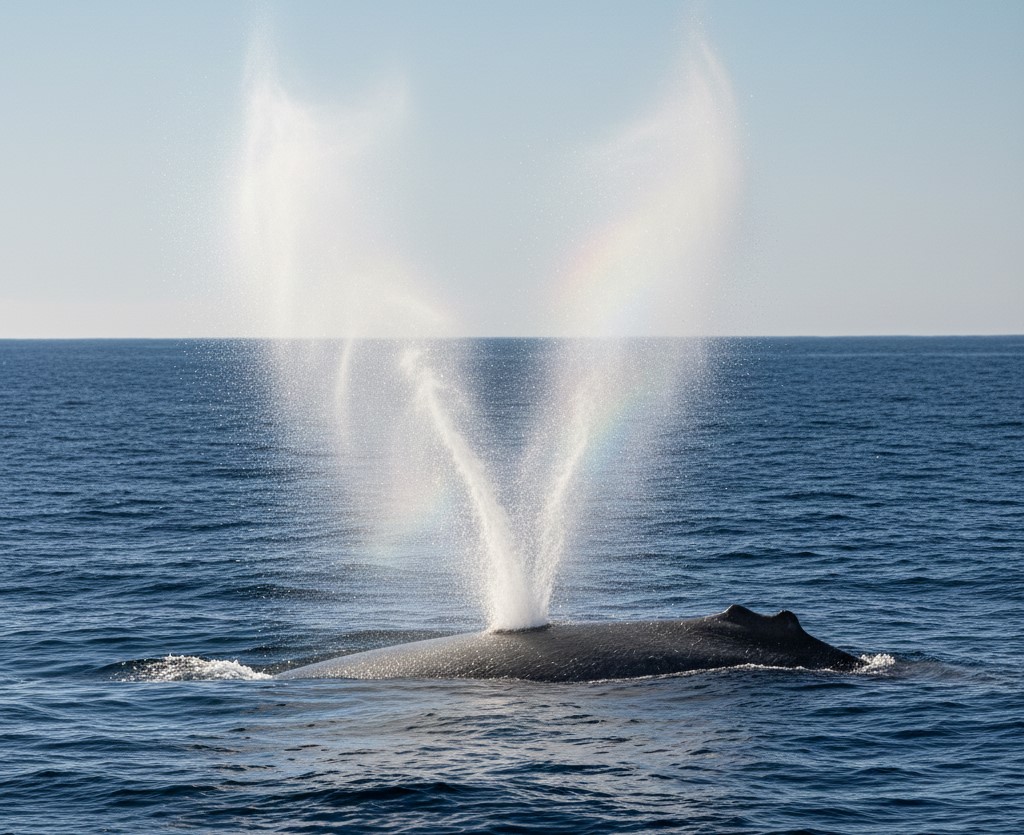
The Blow. This is usually your first clue. Gray whales surface to breathe, and when they exhale, they shoot a V-shaped mist of water vapor up to 15 feet in the air. They’ll typically blow 3-5 times over 15-30 seconds before diving again. Once you’ve seen a few blows, you’ll start recognizing them instantly—your eyes just… tune in.
The Back. After the blow, you’ll see their “knuckled” back emerge—a series of bumps along their spine instead of a dorsal fin. It’s distinctive. Unmistakable.
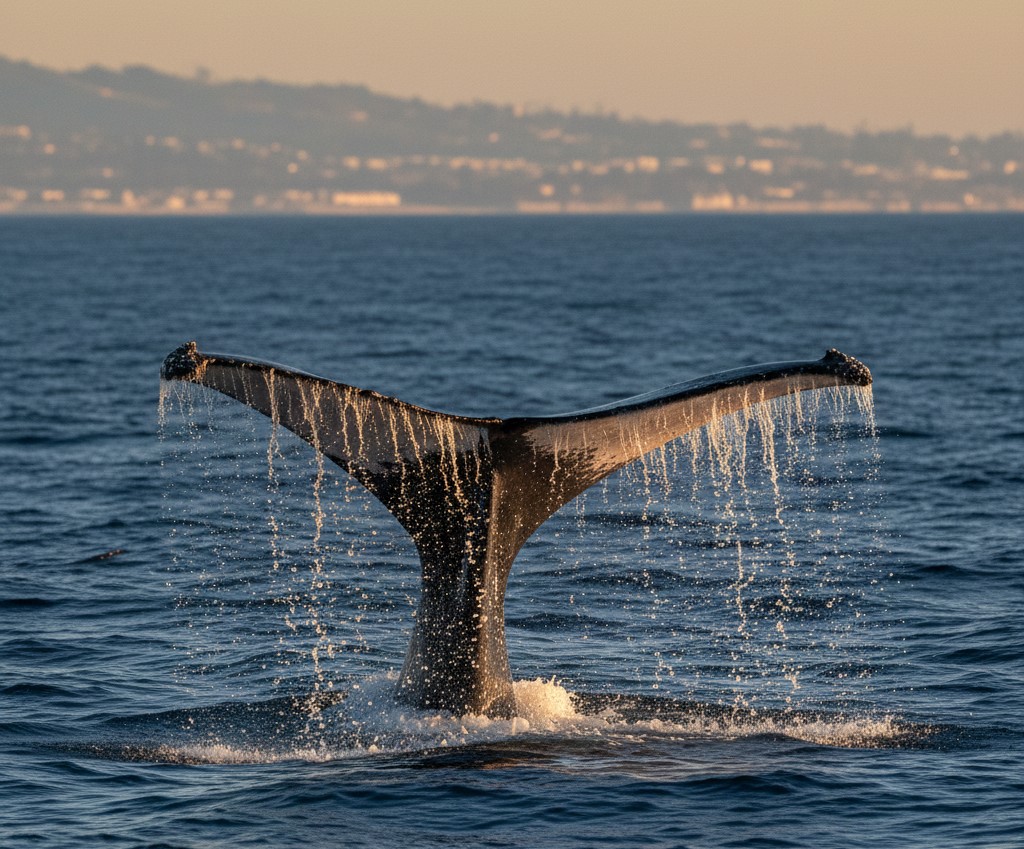
Fluking. Before a deep dive, many gray whales lift their tail flukes out of the water. Not always, but when it happens? That’s your money shot. That’s the photo you’re showing everyone for the next three months.
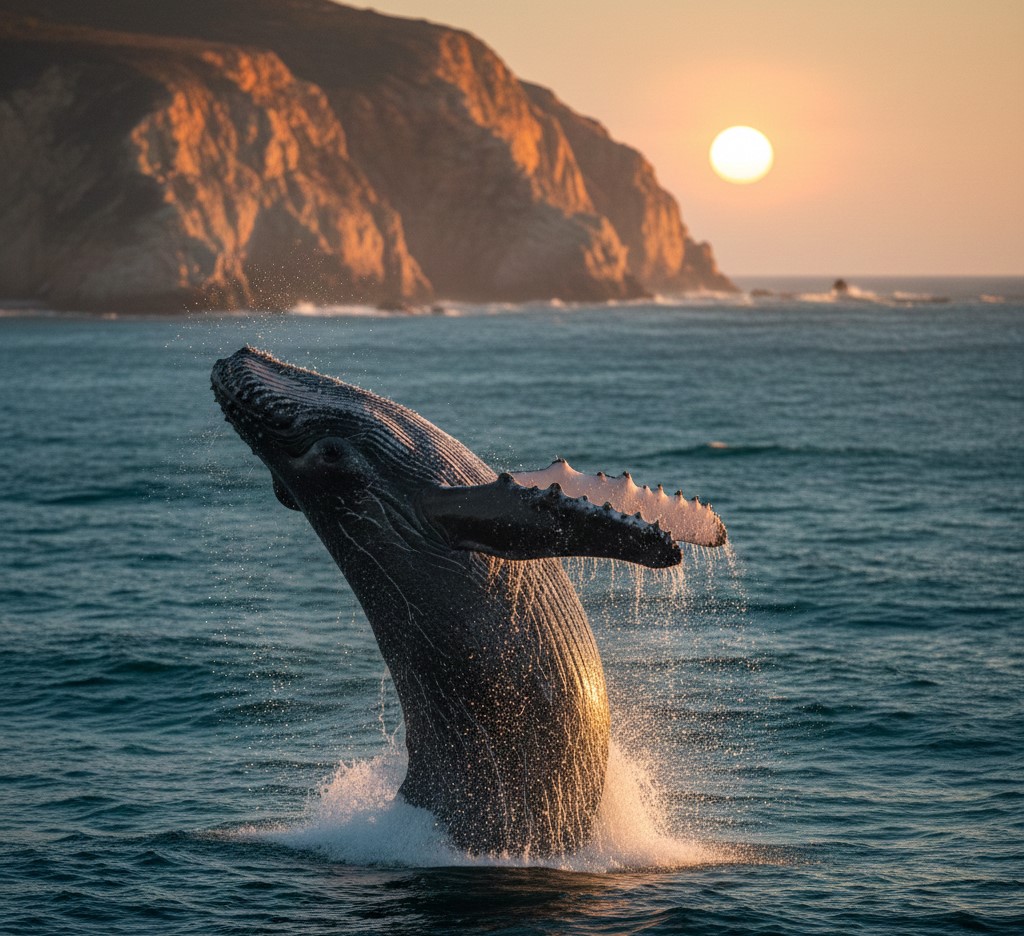
Breaching. This is the holy grail. Sometimes—and no one’s entirely sure why—a gray whale will launch its entire body out of the water and crash down on its side with an explosion of white water. Scientists think it might be communication, removing parasites, or just… playing. Yes, 40-ton animals can play.
Spy-hopping. Occasionally, a curious gray whale will stick its head straight up out of the water, like a giant periscope, and just… look around. Are they checking out the boat? The coastline? Us? Who knows. But it’s absolutely mesmerizing when it happens.
They cruise along at a pretty relaxed pace—about 3-6 miles per hour—and can hold their breath for 3-5 minutes, though some have been recorded staying down for 15 minutes when they really commit to a deep dive.
The Miracle of Life: Gray Whale Calves
Let me tell you about gray whale babies, because this part always gets me.
When a calf is born in those Baja lagoons, it weighs around a ton—2,000 pounds. It’s already 15 feet long. And within 15 seconds of birth, it has to take its first breath. Within 30 minutes, it has to learn to swim. There’s no room for error out there.
The mother immediately begins nursing, and here’s where the numbers get wild: that calf will drink 50-80 pounds of milk every single day. Gray whale milk is 53% fat—it’s basically liquid butter. And the calf? It gains 60-70 pounds per day. Every. Single. Day.
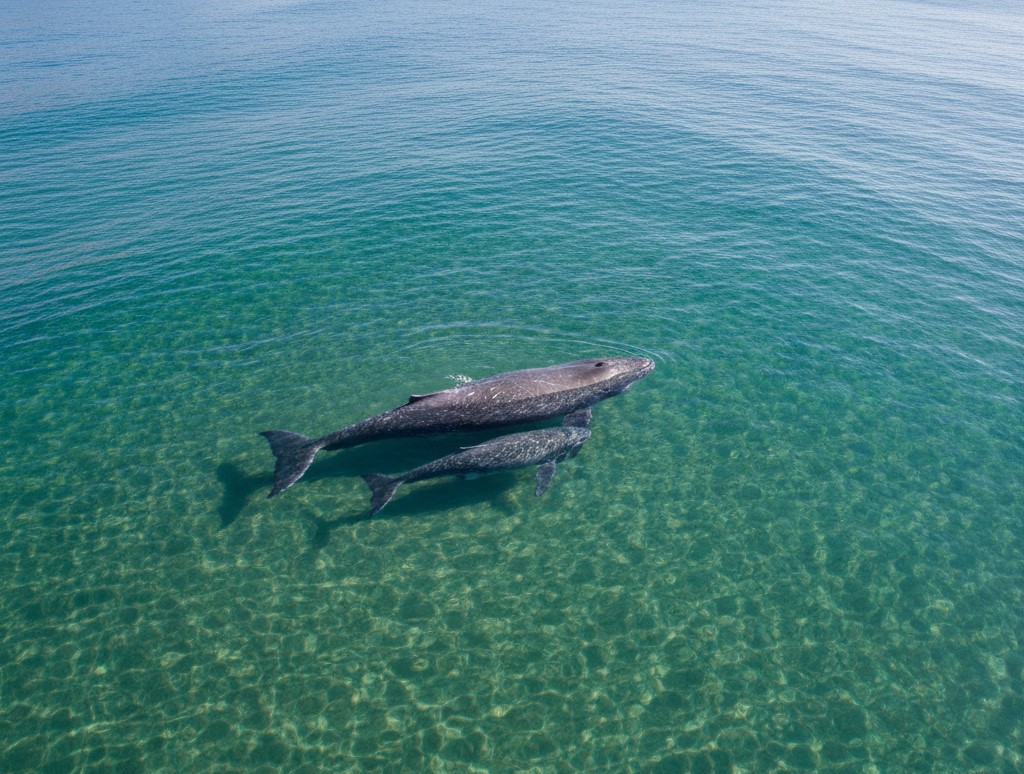
By the time March rolls around and mom decides it’s time to head back north, that calf has packed on enough weight to survive the journey. But they’re still babies—still learning, still vulnerable. So the mothers hug the coastline, swimming slowly, teaching their young how to navigate, how to breathe efficiently, how to watch for danger.
This is why the northbound migration (March-April) is actually a better time for whale watching if you want to see mothers and calves together. The southbound whales in December and January are in a hurry—they’re trying to reach Baja ASAP. But the northbound mothers with babies? They’re taking their time. They’re stopping to rest. They’re staying closer to shore.
And honestly? Watching a mother whale guide her calf past San Diego, the baby awkwardly trying to copy her breathing pattern… it’s one of those moments that just hits different.
When to See Gray Whales in San Diego: Your Perfect Timing Guide
Alright, let’s talk timing. Because not all weeks are created equal when it comes to gray whale watching.
Southbound Migration: December Through February
The first gray whales start appearing off San Diego in early December. These are the “scouts”—usually males and non-pregnant females who aren’t in any particular rush. Sightings pick up through the month.
But January and February? That’s when it gets crazy. Peak season. This is when the bulk of the population—including all those pregnant females—comes streaming past. Historically, at the height of migration, up to 1,000 whales per day would pass Point Loma. A thousand. In one day.
These southbound whales are focused. They’re swimming with purpose—averaging about 75 miles per day. They’re not here to sightsee; they’re here to get to Baja before those babies arrive. So while you’ll see plenty of them, the encounters tend to be briefer. They surface, blow, dive, and keep moving.
Northbound Migration: March Through April
This is my favorite time, honestly.
By March, the lagoons in Baja are starting to empty out as mothers and calves begin the return journey. The pace is completely different now—much slower, more deliberate. Mothers are protecting and teaching their young, and that means sticking closer to the coastline where it’s safer and the water’s a bit calmer.
You’ll also see more feeding behavior during the northbound migration. The mothers have been fasting or barely eating for months—they’ve lost up to a third of their body weight while nursing. So if they encounter a good patch of amphipods in the shallows, they’ll stop and feed. That means longer, more relaxed sightings.
Plus, there’s something deeply moving about watching a baby whale—barely two months old—making its very first journey up the California coast. You’re witnessing the beginning of its life as an ocean traveler.
Where to Watch: Land vs. Sea
So you want to see these whales. Where do you actually go?
Land-Based Viewing: The Free Option
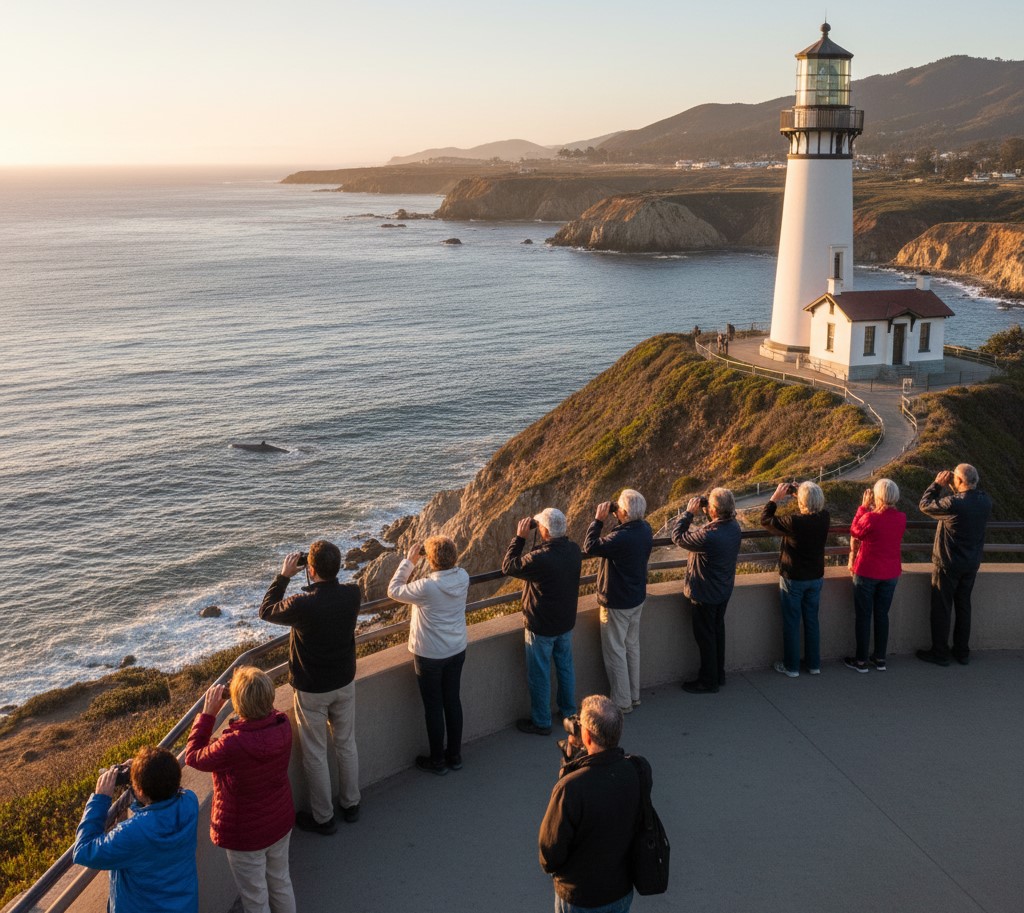
Cabrillo National Monument is the gold standard for land-based whale watching. You’re standing 420 feet above sea level at the Whale Watch Lookout Point, and when conditions are right, you can track gray whales for several minutes as they swim past Point Loma. The park provides free binoculars in the Visitor Center (bring quarters—they’re coin-operated), and there are naturalists on hand during peak season to answer questions.
Best time to go? Mid-December through March. Mornings are generally better—less wind, clearer visibility, better lighting.
The thing about land-based watching is patience. You’re scanning a huge expanse of ocean, looking for a little puff of mist or a dark shape breaking the surface. But when you spot one? And you realize you can watch it surface, blow, dive, and travel along the coast for five, ten minutes? There’s something primal about that. You’re tracking a whale like humans have done for thousands of years.
Torrey Pines State Natural Reserve is another excellent spot—high cliffs, panoramic views, and you can combine whale watching with hiking. On a clear day, it’s absolutely stunning up there.
Birch Aquarium at Scripps in La Jolla offers both views and education. You can watch for whales from their outdoor spaces, then head inside to learn about the oceanography and marine biology that makes this migration possible. It’s about 20 minutes north of downtown San Diego.
Boat Tours: Getting Up Close (Respectfully)
Here’s the thing about boat tours: gray whales swim 1-5 miles offshore along San Diego. That’s close. Really close compared to species like blue whales that hang out 15+ miles from land.
So when you’re on a boat tour during peak season, you’re not straining to see distant specks. You’re watching 40-foot animals surface right there—close enough to hear their blows, see the barnacles on their skin, feel the mist from their exhalations drifting over the boat.
Most tours depart from the Downtown Embarcadero, right near the USS Midway. You’ve got options ranging from large, stable yachts (great for families and anyone worried about seasickness) to smaller, faster catamarans that can cover more distance and respond quickly when whales are spotted.
The best tours have a marine biologist or naturalist on board. Trust me, it makes a massive difference. They’ll explain what you’re seeing in real-time, point out behaviors you’d otherwise miss, and provide context that transforms the experience from “cool, a whale” to “holy crap, I’m watching evolutionary biology in action.”
Conservation Story: Back from the Brink
Okay, quick history lesson—because this matters.
In the 19th century, gray whales were hunted so intensively that they were nearly driven to extinction. By the early 1900s, some scientists actually thought they were gone. Extinct. Done.
But in 1970, full protection was finally established in the Eastern Pacific. No more hunting. No more killing. And the gray whales? They came back.
By the late 1990s, the population had recovered to somewhere between 18,000-30,000 individuals—basically, pre-whaling numbers. It’s considered one of the greatest marine conservation success stories ever. These whales were written off, and they came roaring back.
There was a scary moment recently. From 2019-2023, scientists documented an “Unusual Mortality Event”—basically, way too many dead whales washing up on beaches. The population dropped to around 14,500. Researchers think it was connected to changing ocean conditions in the Arctic affecting their food supply.
But here’s the good news: in 2023-2024, the population rebounded strongly. Current estimates put the Northern Pacific migratory population at around 19,000-21,000 whales. They’re not considered threatened or endangered anymore.
So when you’re out on that boat, watching a mother and calf swim past? You’re witnessing a success story. You’re seeing what’s possible when we actually give a damn and protect wildlife.
What to Expect: Making the Most of Your Experience
Let’s set realistic expectations.
Spotting Your First Whale
Your eyes are going to be drawn to movement—birds diving, waves breaking, boats passing. But whale blows look different. They’re vertical. They’re taller than you’d think (up to 15 feet). They’re white or light gray against the darker ocean.
Once you spot a blow, watch that spot. The whale will usually surface 2-3 more times in roughly the same area, each time showing more of its back. Then, if you’re lucky, you’ll see the tail flukes lift up before it dives deep and disappears for 3-5 minutes.
Gray whales usually travel alone or in small groups of 2-3. They’re not the social butterflies that dolphins are. So don’t expect massive pods—expect individual encounters, each one special.
Pro Tips (From Someone Who’s Done This Wrong)
Bring binoculars. I can’t stress this enough. Even on a boat tour. Something in the 7×50 range is perfect—powerful enough to see details but not so strong that the boat’s motion makes you dizzy.
Polarized sunglasses are essential. The glare off the water is brutal, and polarization cuts through it so you can actually see beneath the surface sometimes.
Dress in layers. I made the mistake once of checking the San Diego weather (68°F and sunny!) and wearing a t-shirt on a whale watching tour. Yeah. Out on the open ocean, with wind and sea spray? I was freezing within 20 minutes. Bring a windbreaker or light jacket at minimum. Waterproof is even better.
Mornings are magic. Less wind, calmer seas, better light for photography, and honestly, the whales seem more active. Afternoon tours are fine, but if you have a choice, go early.
For families: Look for tours that explicitly mention marine biologists or naturalists on board. Kids get way more engaged when there’s someone explaining what’s happening and answering their 47 questions about whale poop (yes, that’s a real thing they ask).
Beyond Gray Whales: Bonus Wildlife
The beautiful thing about whale watching in San Diego? Gray whales are almost never the only show.
Dolphins are nearly guaranteed. Common dolphins, specifically, and they travel in absolutely massive groups called “megapods”—we’re talking hundreds, sometimes thousands, of animals moving together. When you encounter a megapod, it’s sensory overload: dolphins jumping, riding the boat’s bow wave, spinning in the air. Pure chaos in the best possible way.
You’ll also see California sea lions and harbor seals hauled out on buoys or swimming near the coast. Sometimes you’ll spot humpback whales, which stick around San Diego year-round but peak in summer. Humpbacks are the acrobats—more energetic, more playful than gray whales.
And very, very rarely? Orcas. Killer whales occasionally pass through San Diego waters, and when they do, every boat in the area converges. I’ve been on exactly one tour where we spotted orcas, and let me tell you—everyone on that boat remembers exactly where they were and what they were doing when the captain made the announcement.
Planning Your Visit: Practical Details
Alright, let’s talk logistics.
Pricing: Most standard boat tours run $35-75 per person for a 3-4 hour trip. Smaller, more intimate tours (6-12 passengers) can cost $110-325, but you get closer to the water, better views, and more flexibility. Private charters start around $650 and go up from there.
Discounts: Look for weekday specials—some operators offer 50% off on weekday morning tours during slow periods. Groupon frequently has deals. If you’re military or a senior, ask about discounts.
Sighting guarantees: Most reputable operators offer a “whale check” or return pass if you don’t see any whales. Important note: this is usually a voucher for a future trip, not a cash refund. And honestly, during peak season (January-February), the chances of not seeing anything are incredibly slim.
Accessibility: If you or someone in your group has mobility concerns, ask specifically about ADA-compliant vessels. Boats like the Lord Hornblower and Adventure Hornblower have accessible ramps and viewing areas on the main deck. The Inspiration Hornblower even has an elevator.
Combining activities: Most whale watching tours are 3-4 hours, which means you’ll have time before or after for other San Diego attractions. The USS Midway Museum is right there at the Embarcadero. The Gaslamp Quarter is a short walk. Balboa Park is 10 minutes away. You can absolutely make this a full day.
The Journey Continues
Every year, around 20,000 gray whales pass by San Diego on their ancient migration route. They’ve been doing this for millennia—long before humans built cities along this coast, long before anyone thought to call it “whale watching.”
And every year, thousands of us bundle up, climb onto boats or hike up to cliff-top viewpoints, and watch them pass. We scan the horizon. We wait. We hold our breath when we spot that first blow.
Because there’s something about watching a 40-ton animal move through the ocean with such purpose, such determination, such life… it reminds us that we’re part of something much bigger. That the world is still wild in places. That miracles still happen.
So if you’re in San Diego between December and April, get out there. Stand on the cliffs at Cabrillo. Book that boat tour. Bring your kids, your parents, your friends who think they’ve seen everything.
Watch for the blow. Wait for the back. Hope for the tail.
And when that gray whale surfaces in front of you, close enough to see the barnacles and scars, close enough to hear it breathe… you’ll understand why people have been making this pilgrimage for 75 years.
Welcome to the great gray migration. Welcome to one of nature’s most extraordinary journeys.
And welcome to the front row.